

When you pick up a packet of snacks, bottled water, or ready-to-eat food, you probably check the expiry date but have you ever thought about the packaging itself? The truth is, food packaging plays a huge role in food safety. And that’s exactly where migration testing in food packaging comes into the picture.
Food packaging isn’t just about looks or convenience. It’s about making sure that harmful substances from packaging materials don’t transfer into the food we eat. Migration testing helps ensure this safety, while also keeping brands compliant with food contact regulations across different markets.
In this blog, we’ll break down Met labs’ migration testing in a simple, non-technical way—what it is, why it’s important, the different types, regulations involved, and how businesses can stay compliant without the headache.
What Is Migration Testing in Food Packaging?
Let’s start with the basics.
Migration testing checks whether substances from food packaging materials move (or “migrate”) into food. These substances can include additives, chemicals, inks, coatings, or even heavy metals used during packaging production.
This migration can happen due to:
- Heat (like microwaving food)
- Long storage times
- Contact with fatty, acidic, or alcoholic foods
Even materials that are safe on their own can become risky if they release substances into food beyond allowed limits. That’s why food contact materials testing is such a big deal.
Migration testing doesn’t mean packaging is unsafe by default—it simply ensures that whatever does migrate stays within safe, regulated limits.
Why Migration Testing Is Critical for Food Contact Materials (FCMs)
If you’re involved in food manufacturing or packaging, migration testing isn’t just a “nice to have”—it’s essential.
Here’s why it matters so much:
- Consumer Health & Safety
The biggest reason is obvious: protecting consumers. Excessive migration can lead to chemical exposure, which may cause long-term health risks.
- Regulatory Compliance
Countries (especially in the EU) have strict food contact regulations. Without proper testing, your product may not be legally allowed on the market.
- Avoiding Costly Recalls
Non-compliant packaging can lead to recalls, penalties, and brand damage—none of which are good for business.
- Brand Trust
Consumers trust brands that prioritize safety. Testing shows you take quality seriously.
Simply put, migration testing protects people, products, and reputations.
Types of Migration Testing in Food Packaging
Migration testing is generally divided into two main categories, each serving a different purpose:
- Overall Migration Testing
- Specific Migration Testing
Both are equally important, and most food packaging materials need a combination of the two.
Let’s break them down.
Overall Migration Testing Explained
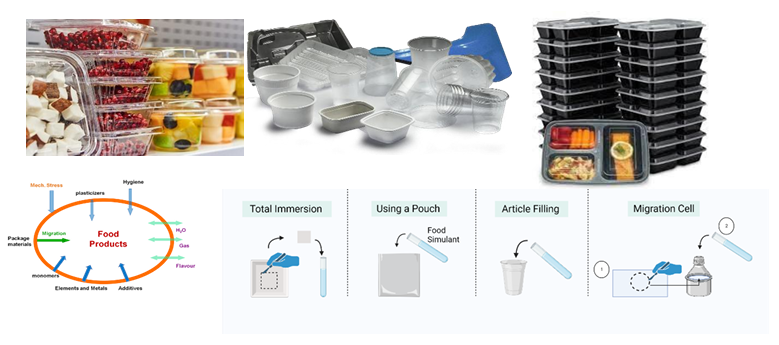
The overall migration limit is 10 milligrams of migration per squared decimetre (mg/dm2) of the food contact material.
Overall migration testing measures the total amount of substances that migrate from packaging into food (or food simulants).
Instead of looking at individual chemicals, this test answers one simple question:
> How much material transfers from the packaging to the food overall?
How It Works (In Simple Terms)
- Packaging is exposed to food simulants (substances that mimic real food)
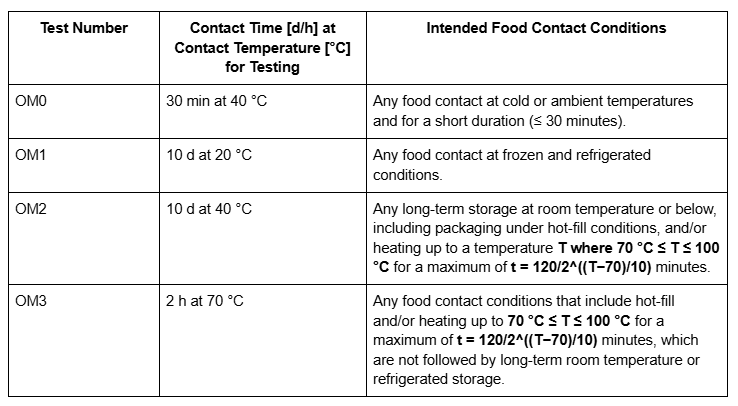
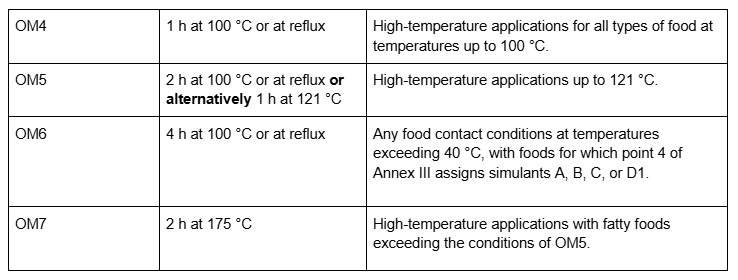
- The test runs under specific time and temperature conditions
- The total migrated material is measured
Table 1. Food Simulants (Regulation (EU) No. 10/2011)
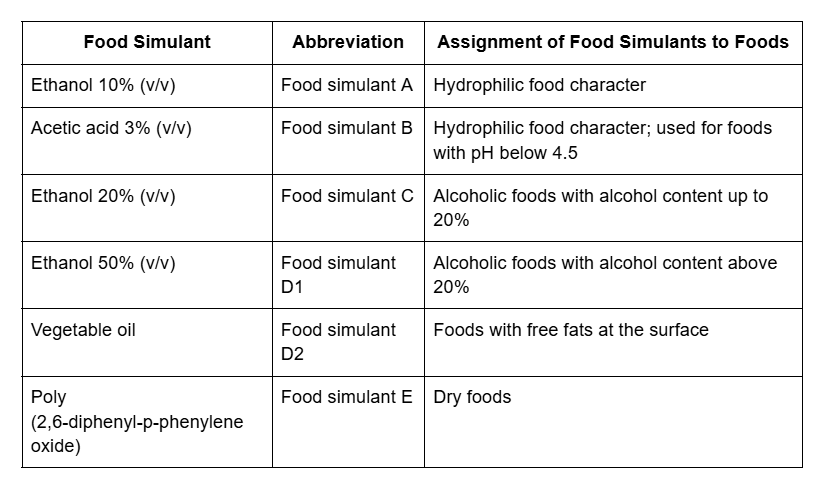
Table. Overall Migration (OM) Test Conditions (EU Regulation No. 10/2011)
Why It’s Important
Regulations usually define an overall migration limit, commonly 10 mg/dm², to ensure packaging materials remain safe for use.This type of testing is especially useful as a first safety check. If overall migration is within limits, it means the packaging material is generally safe under expected use conditions.
What Is Specific Migration Testing?
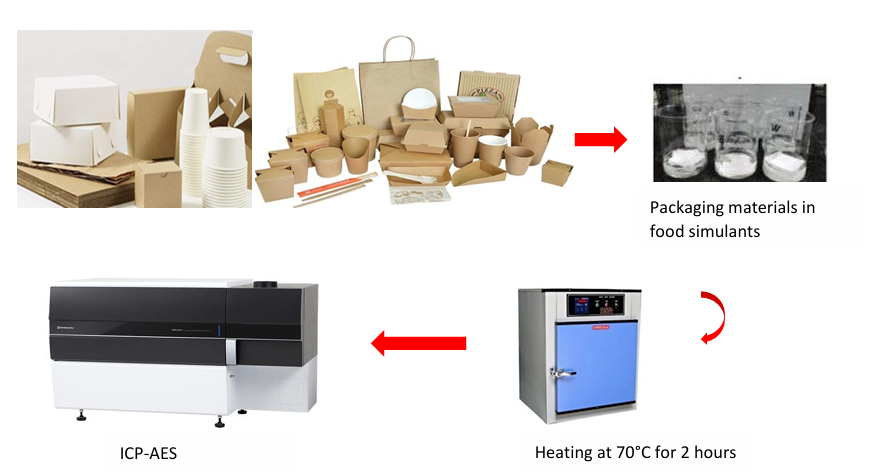
METS IP-19- Specific migration of metals in food contact materials
While overall migration looks at the big picture, specific migration testing zooms in on individual substances.
This test measures how much of a particular chemical (like a heavy metal, plasticizer, or additive) migrates into food.
Why Specific Migration Testing Matters
Some substances are safe in tiny amounts but harmful if they exceed certain limits. Specific migration testing ensures that these substances stay within legally defined thresholds.
Examples of Substances Tested
- Heavy metals (like lead or cadmium)
- Plastic additives
- Monomers
- Stabilizers and colorants
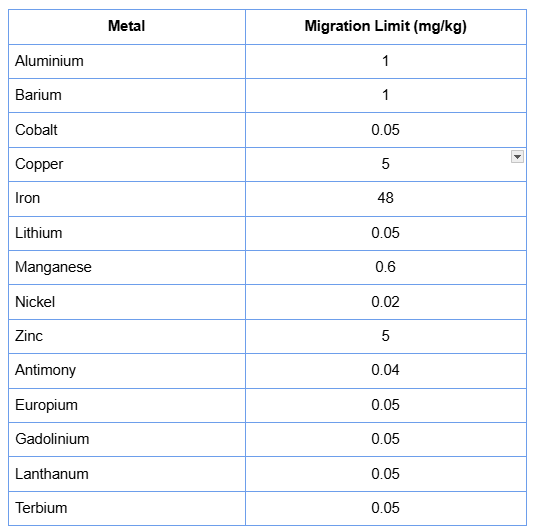
Specific migration testing is especially important when regulations list specific migration limits (SMLs) for certain substances.
Limit of elements in specific migration-COMMISSION REGULATION (EU) 2020/1245
Food Simulants Used in Migration Testing
You might be wondering—why not just test with real food?
Good question. Testing with real food isn’t always practical, consistent, or reliable. That’s why laboratories use food simulants, which are specially selected liquids that behave like real food during testing.
Common Food Simulants Include:
- Aqueous simulants – for water-based foods
- Acidic simulants – for foods like pickles or sauces
- Fatty simulants – for oily or greasy foods
- Alcoholic simulants – for beverages and certain extracts
These simulants help ensure accurate and repeatable migration testing in food packaging, regardless of food type.
Regulatory Standards & Guidelines for Migration Testing
One of the biggest drivers of migration testing is regulation—especially in the European Union.
Why Standards Matter
Standardized testing ensures that:
- Results are reliable and comparable
- Products meet legal safety requirements
- Packaging is accepted in international markets
Key Regulatory Focus Areas
- Limits for overall migration
- Specific migration limits for restricted substances
- Defined testing conditions (time, temperature, simulants)
For companies exporting food or packaging materials, complying with EU food contact regulations is often non-negotiable.
Industries That Require Migration Testing
Migration testing isn’t limited to one sector—it’s needed across multiple industries, including:
- Food & beverage manufacturers
- Packaging material producers
- Ready-to-eat and processed food brands
- FMCG companies
- Export-oriented food businesses
If your product comes into contact with food at any stage, FCM testing standards likely apply to you.
Choosing the Right Migration Testing Partner
Not all testing labs are the same, and choosing the right one makes a big difference.
Here’s what to look for:
- Accredited laboratories with recognized standards
- Experience in food contact materials testing
- Knowledge of global and EU regulations
- Clear, easy-to-understand test reports
- Support beyond testing (guidance on compliance)
Mets lab , doesn’t just run tests—we help you understand results and stay compliant long-term.
Conclusion
At the end of the day, migration testing in food packaging is about safety, trust, and responsibility. It ensures that packaging materials do what they’re supposed to—protect food, not contaminate it.
With growing regulatory scrutiny and increasing consumer awareness, proactive migration testing isn’t optional anymore. It’s a smart investment that helps businesses avoid risks, meet compliance requirements, and deliver safe products to market.
Ready to Ensure Your Packaging Is Safe?
If you’re involved in food packaging or manufacturing, now is the time to take migration testing seriously. Working with experienced experts can help you meet global food packaging compliance standards with confidence.
Get your food contact materials tested today with Met labs and keep safety sealed in every package.
What is the difference between overall and specific migration?
Overall Migration measures the total amount of all substances that can migrate from a food contact material into food (or food simulants).
- It gives a global safety picture of the packaging material.
- The result is compared against an overall legal limit (e.g., total mass transferred).
- It does not identify individual chemicals, only the total migrated quantity.
- Specific Migration, on the other hand, measures the migration of individual substances (such as certain metals, additives, or chemicals).
- It focuses on known or regulated substances that may pose health risks.
- Each substance has its own specific migration limit (SML).
- It is more targeted and detailed than overall migration testing.
Is migration testing mandatory?
Yes, migration testing is mandatory in many regions, especially for businesses placing food contact materials on regulated markets.
How often should packaging be tested?
There is no single fixed frequency, but testing is required whenever there is a risk of change. Packaging should be tested:
- Before first market launch
- When raw materials change (resins, inks, additives, coatings)
- When suppliers change
- After design or thickness modifications
- When intended food type or storage conditions change
- Periodically, as part of ongoing compliance and quality assurance